Dandelion Honey
Posted on
Last updated on
We're a little late to start the garden stuff this year but we've mostly prepped our planters and begun to plant the seeds that will grow into food we'll eat daily in a few months time. Side note: I need to write about this part of my life more, I need to port over my old wordpress posts about it, and also build category/tag filter functionality into the site... the data is there, I just gotta do the logic bits and the copy/paste bits!!
Each year we edge slightly more self-sufficient than before by growing more and figure out what works for us and what doesn't. As we look forward to growing more of our own food again this year, we find ourselves learning a bunch of cool stuff. My wife was reading things and learned one such cool stuff: by mixing dandelion petals, water and sugar you can make a honey-like substance! We're not lucky enough to have 5 gallons of maple syrup on the go but this'll do us for now! :D
Dandelions are everywhere - they're a bit of a super food in that the entire plant is edible and contains a bunch of nutrients and as a bonus they grow pretty much everywhere. Odds are you'll be able to find them near where you are (unless you're in Antarctica.) I've heard before that they grow where soil is unhealthy and in fact help restore its health, which is pretty great if true. Wikipedia states It is kept as a companion plant; its taproot brings up nutrients for shallow-rooting plants. It is also known to attract pollinating insects and release ethylene gas, which helps fruit to ripen.
so I'll continue to assume that to be true and am now considering cultivating it in the greenhouse...
After sharing this with us, my son and I went out around the house and nearby (safe and clean) areas and picked about 4 cups-worth of the yellow flower, leaving the leaves and stem in place. Upon returning home my wife took over from the kid and we both pulled the yellow petals from the flower heads, dropping them straight into a saucepan, trying to minimise the amount of green stuff that ended up in there as it seemingly becomes bitter if you leave too much in there. We didn't wash them, as this would wash away any remaining nectar.
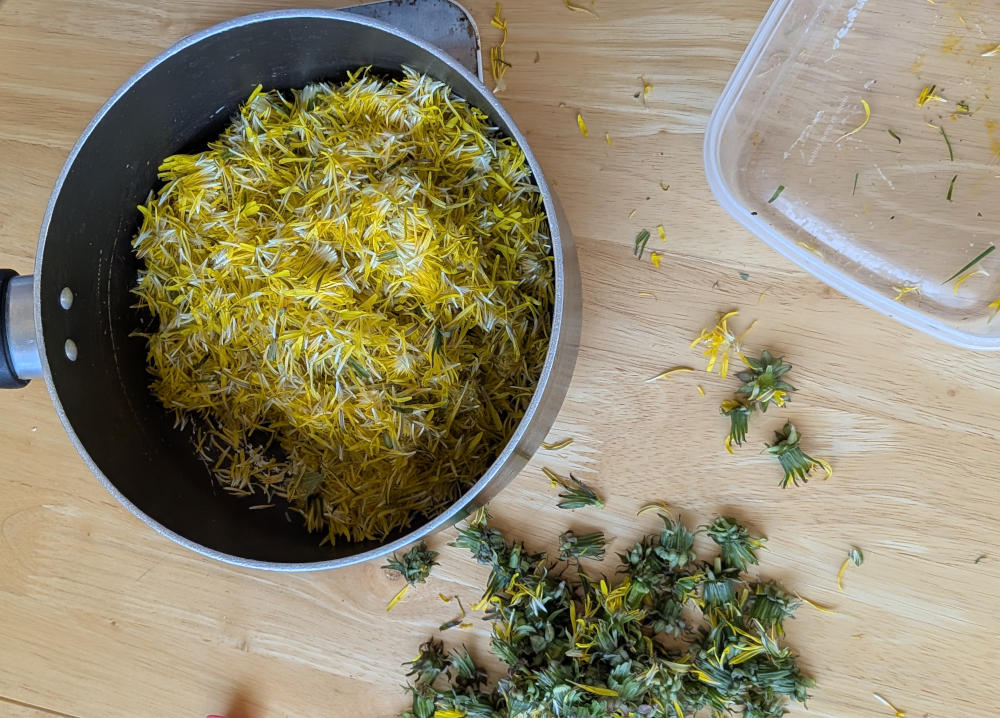
The remains of the flowers have gone in a container for our two guinea pigs.
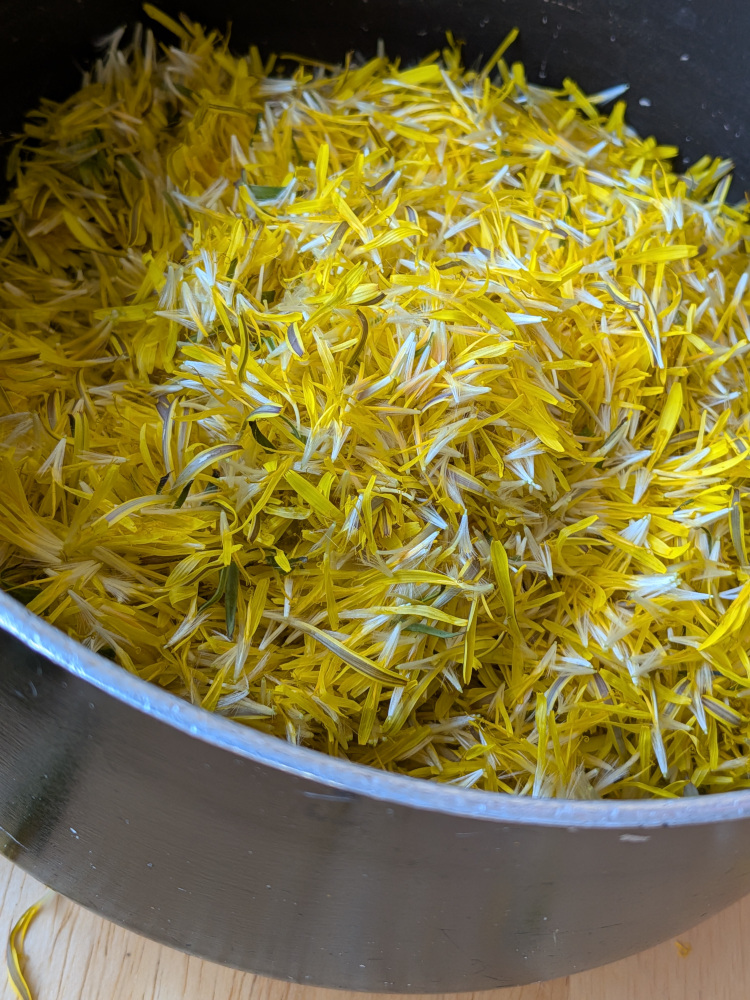
The saucepan was filled with around 250ml of water and gently boiled. After straining, the yellow liquid was returned to the saucepan and 250g(!) of sugar was added (I know right. We've been told to match the volume of water in ml with the weight of sugar in grams so if you use more or less water, you might want to adjust the sugar number) We then stirred this a bunch as it heated back up gently, then let this simmer on a low heat for about an hour and a half to reduce it down. After cooling a little in the saucepan the 'honey' went into a jar to let it cool to room temperature, at which point it went into the fridge.
The resulting honey is way thinner than your regular bee-origin honey, but it tastes very similar. Great for adding to tea, toast, or our current breakfast favourite, overnight chia seed pudding.
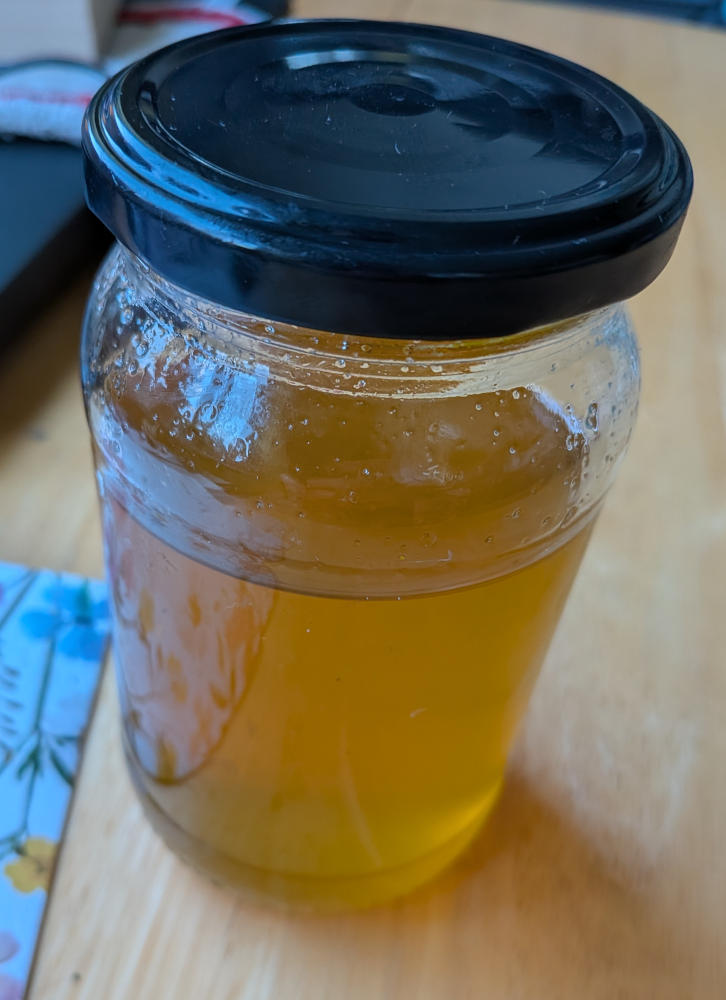
This was our first batch, a small test to see how it tasted (it's pretty great) but we already have some changes we'd make:
- Pick them on a warm, sunny day: They'll apparently have more nectar in there, opening up more to attract pollinators. We picked these in a fairly mild (approx 12 celcius) temperature, where it had been overcast for much of the day
- Pick them in the morning: We picked these in the evening. Any nectar would have been slurped up by insects already.
- Pick way more: we want way more of this. If we could cook a big batch that'd be great. It's so much sugar though but honey is also very high in sugar!
- Use less water: we're thinking less water will result in a thicker substance! Experiments will determine if this pans out!
If it's warm tomorrow I'll probably go pick some more!